
Most denim lovers focus on fit, wash patterns and ounce weight when selecting jeans. Yet few pay attention to the core building block hidden inside the fabric — denim yarn. Even with identical enzyme stone wash recipes, different yarns will deliver totally different whisker depth, monkey wash gradient, contrast fading, surface nap and pilling risk. All those attractive vintage fade marks, rigid or soft handfeel of denim, start from individual indigo yarns.
Traditional denim follows the classic rule: indigo dyed warp yarns + natural white weft yarns. This is the secret why denim ages beautifully. Indigo pigment only coats the outer layer instead of penetrating the yarn core, forming a ring-dyed structure: blue outside, white inside. With continuous wearing friction and washing, the blue surface gradually wears away and exposes the white cotton core, creating natural layered fading such as whiskers, honeycombs and thigh monkey marks.
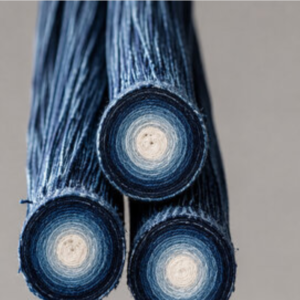
The top choice for high-end vintage denim and raw selvedge denim. Cotton fibers align tightly with natural twist and controlled nap. It owns great tenacity and toughness. After washing, it produces rich fading layers with soft transition for hand brush and PP spray, bringing authentic vintage texture. Cons: Slow production speed and higher cost, usually thick counts for heavyweight raw denim above 12oz. Best for: Enzyme wash, hand brush & monkey wash, heavy distressed finish, premium selvedge styles.
Widely adopted for fast fashion and budget denim. High productivity and competitive price. OE yarn features even structure and smooth fabric face. However, lower fiber cohesion leads to weaker strength. Its fading tends to be flat without deep vintage contrast, and it easily pills under heavy wash processes. Best for: Normal garment wash, light wash, basic styles, lightweight stretch denim.
An upgraded version of ring spun. It removes excessive long hairiness effectively, resulting in cleaner fabric surface with better anti-pilling performance and stable color fastness. Handfeel is smooth and neat while maintaining good strength. It is popular for mid-to-high end lightweight denim and mercerized denim now. Best for: Clean light wash, laser whiskers, mercerized denim, orders requiring low pilling.
Features irregular thick-and-thin segments along the yarn length. Fabrics woven with slub yarn carry natural cloud texture. No heavy destroy wash is needed to get that rugged vintage look. We have warp slub, weft slub and double-direction slub. Slub ratio and interval directly control the final visual style. Best for: Dirty wash, chemical stone wash, snow wash, workwear denim.
Cotton wraps around an inner spandex filament. Spandex content normally ranges from 2% to 4% to provide stretch and recovery for slim-fit jeans. Stretch yarns are sensitive to washing processes: strong bleach and aggressive chemical wash will make spandex brittle and cause permanent loss of elasticity. Wash plants must be notified in advance for stretch orders.
A common sampling mistake is mismatching yarn and wash recipes. Trying heavy sandblast & monkey marks on high-twist compact yarn will never get bright white contrast. Heavy chemical wash on loose OE yarn will trigger massive fuzzing and fabric rejection.
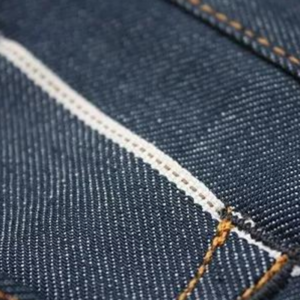
Overseas buyers are putting more emphasis on raw material sustainability: recycled cotton denim yarn, organic cotton yarn, low-water indigo yarn and sulphur-free dyed yarn. These eco yarns require matched low-impact washing auxiliaries and wastewater management. They fit European and premium sustainable brands, and yarn traceability is increasingly required during factory audits.
The stunning fade character of jeans is not magically created by wash houses. Washing is the brush, while denim yarn is the canvas. Understanding spinning type, twist level and ring-dye property helps you predict wash outcome before sampling, reduce repeated revisions, shade deviation and style mismatch, stabilize quality and hit customers’ target looks — vintage, clean, workwear or stretch.